



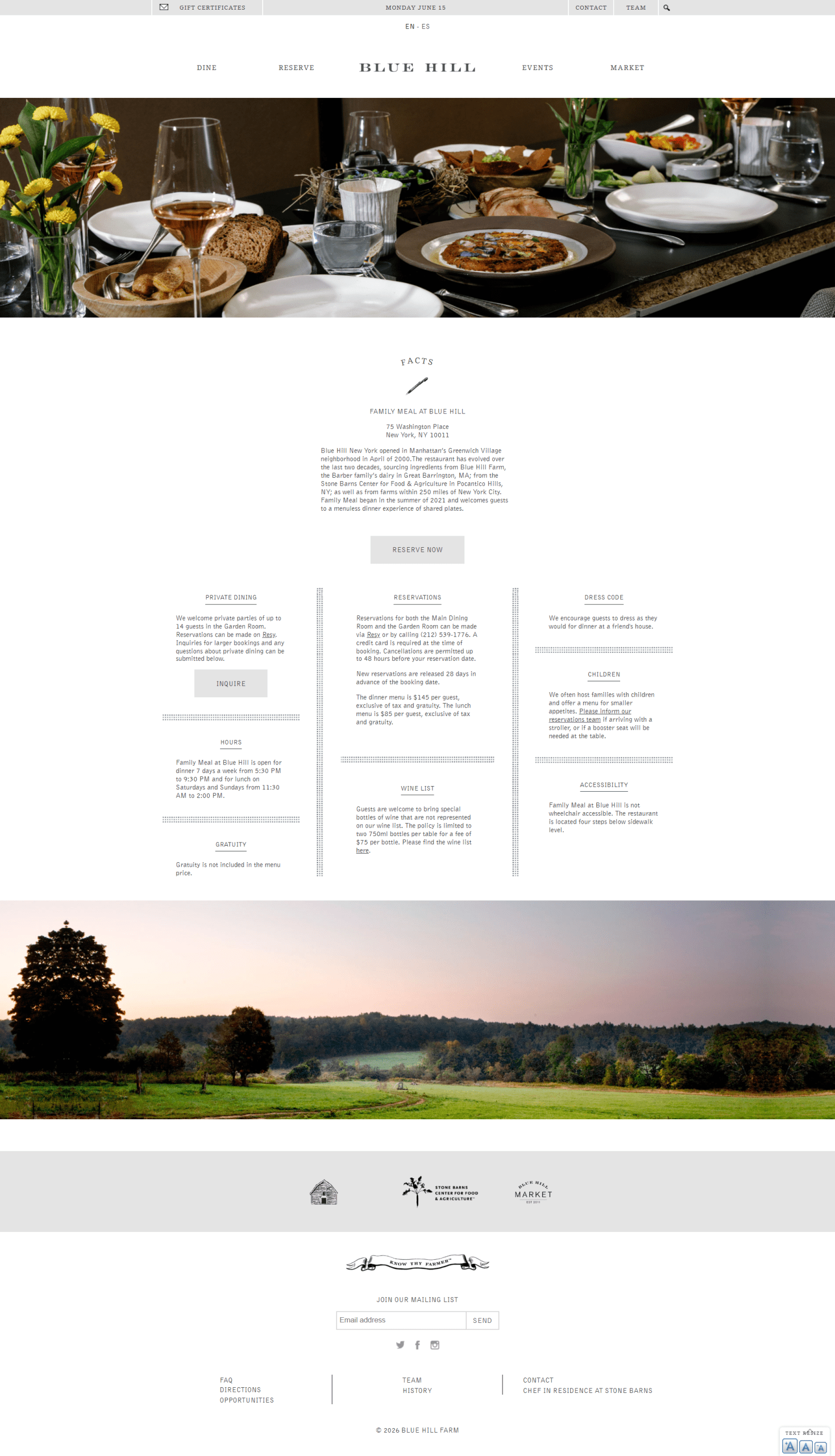
Blue Hill Farm – Website
Translating a world-class farm-to-table experience into a refined digital presence
Blue Hill Farm is connected to one of the most influential farm-to-table dining experiences in the United States: Blue Hill at Stone Barns, located at the Stone Barns Center for Food & Agriculture in Pocantico Hills, New York. The brand is deeply associated with seasonal cuisine, local agriculture, regenerative thinking, and the culinary vision of chef Dan Barber.
Our role was to create a digital experience that reflects the depth of the brand: not simply a restaurant website, but a platform that communicates place, philosophy, food, agriculture, education and hospitality in one coherent narrative.
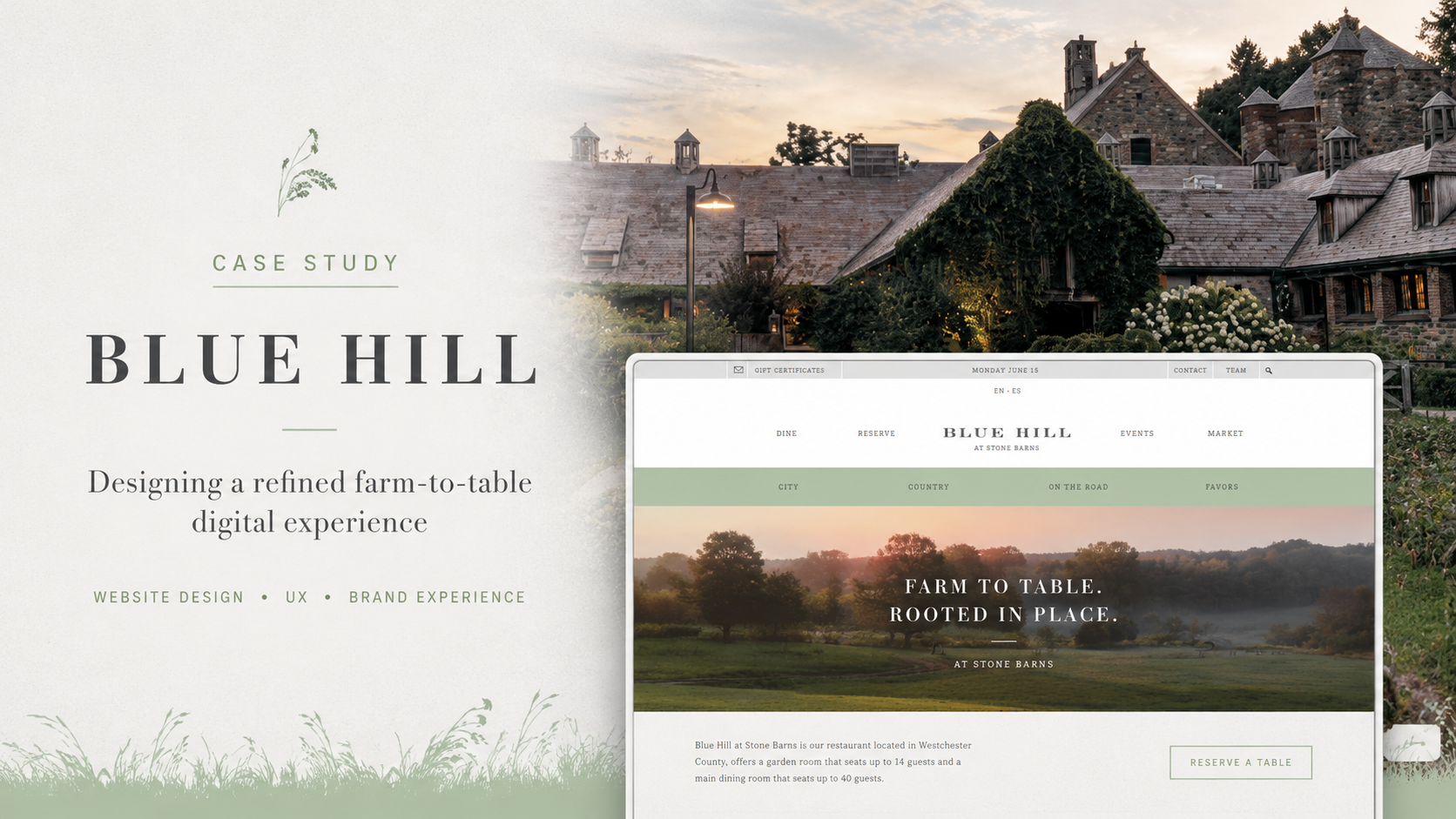

The Challenge
Blue Hill is not a conventional restaurant brand. Its value does not come only from a menu, a location or a reservation system. It comes from a complete ecosystem: the farm, the fields, the kitchen, the seasons, the growers, the research, the guest experience and the broader conversation around the future of food.
The challenge was to translate this complex identity into a website that feels elegant, calm and premium, while still remaining practical for visitors looking for essential information such as dining experiences, reservations, locations, events and the story behind the brand.
The digital experience also had to preserve the sense of discovery that defines Blue Hill. The website needed to avoid feeling like a standard hospitality template and instead express the rhythm of the farm: seasonal, thoughtful, editorial and deeply connected to the land.
Our Solution
We structured the website around storytelling rather than simple promotion. The brand’s philosophy became the foundation of the user journey: visitors are invited to understand the relationship between food, agriculture and place before moving toward practical actions such as booking, exploring experiences or learning more about the team.
The visual direction was designed to feel refined and organic: restrained typography, generous spacing, atmospheric photography, natural textures and a calm editorial layout. This allows the food and agricultural environment to take centre stage without overwhelming the visitor.
The website experience supports two complementary goals. First, it communicates Blue Hill as a premium culinary destination. Second, it positions the brand as a thought leader in the conversation around sustainable agriculture, local food systems and seasonal cooking.
UX and Content Strategy
The user journey was built for several types of visitors: diners seeking a reservation, culinary enthusiasts exploring the philosophy, press and partners looking for background information, and guests interested in the relationship between the restaurant and Stone Barns.
Instead of pushing users immediately into a transactional flow, the website creates context. It explains the place, the people and the purpose behind the experience. This builds emotional value before conversion.
Key content areas were designed around:
- the farm and restaurant ecosystem
- seasonal dining experiences
- the Blue Hill story
- chef and team credibility
- the connection with Stone Barns
- reservations and practical visitor information
- editorial content around food, agriculture and sustainability
This gives the website a stronger role than simple information delivery. It becomes a digital extension of the dining philosophy.
Brand Positioning
The brand positioning is built around a clear idea: Blue Hill is not just a place to eat, but a place to understand food differently.
The website reinforces this by presenting the restaurant as part of a living agricultural system. Ingredients are not treated as decorative menu items; they are connected to soil, season, cultivation, research and craft.
This positioning allows Blue Hill to stand apart from other premium restaurants. It communicates luxury without excess, expertise without coldness, and sustainability without turning the experience into a lecture.
Visual and Digital Identity
The design approach supports the brand’s quiet authority. Rather than relying on aggressive calls to action or conventional restaurant marketing, the website uses a more editorial rhythm: large imagery, concise text, elegant navigation and a strong sense of atmosphere.
The visual identity is intentionally understated. It lets the farm, the kitchen and the seasonal produce carry the emotional weight. This makes the experience feel authentic, mature and aligned with Blue Hill’s reputation.
Key Results
The final website creates a premium digital environment that reflects the unique nature of Blue Hill.
It strengthens the brand’s authority, improves clarity around the dining experience, supports reservations, and communicates the deeper mission behind the restaurant. The website helps visitors understand that Blue Hill is not only about fine dining, but about the future of food, farming and hospitality.
For the brand, the platform works as both a practical hospitality tool and a long-term storytelling asset.
Conclusion
Blue Hill Farm’s website demonstrates how a restaurant website can move beyond menus and booking forms. By combining refined design, editorial storytelling, agricultural context and clear user pathways, the platform translates a complex farm-to-table philosophy into an elegant digital experience.
The result is a website that feels premium, intelligent and deeply rooted in place — a digital expression of a restaurant and farm ecosystem where food, land and hospitality are inseparable.


