



Canlis – Restaurant Website
Translating a landmark fine-dining institution into a refined digital experience
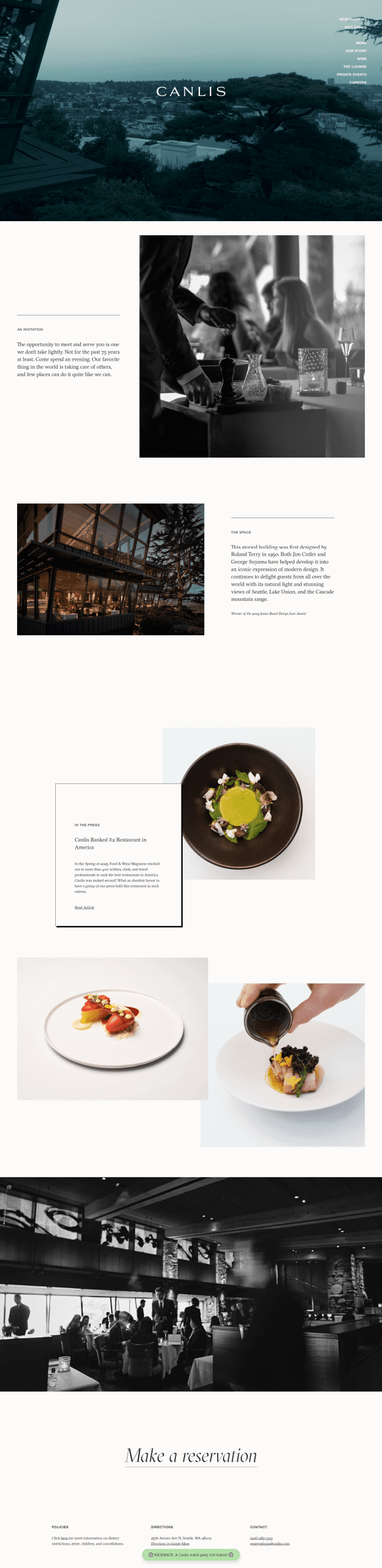
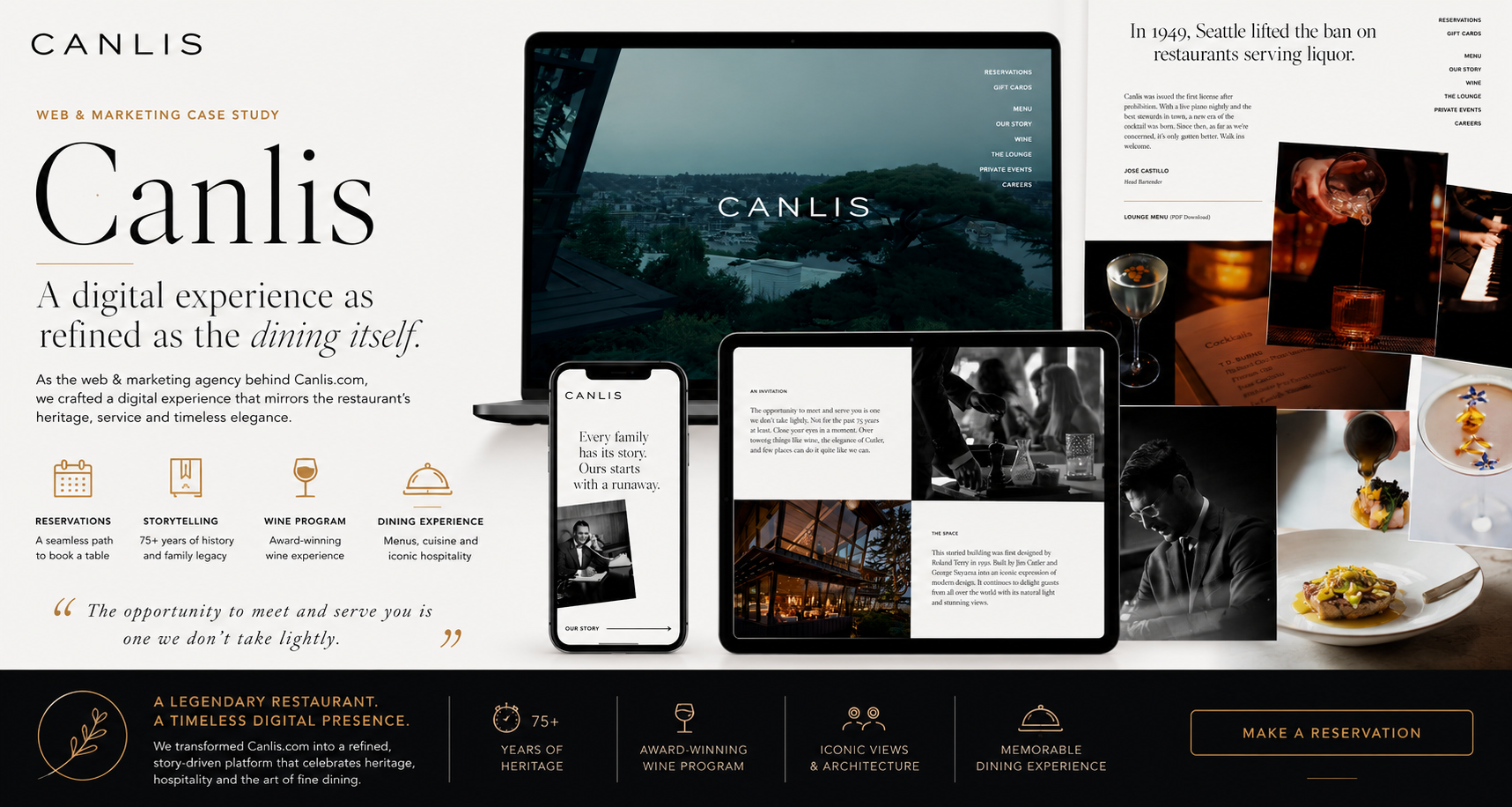
Canlis is one of Seattle’s most iconic fine-dining restaurants, family-owned since 1950 and built around an unusually strong hospitality promise: “the opportunity to meet and serve you is one we don’t take lightly.” The website presents Canlis not only as a restaurant, but as a complete hospitality institution: dining room, wine program, lounge, private events, gift cards, careers and reservations.
Our goal was to create a digital experience that respects the heritage of Canlis while making the guest journey direct, elegant and emotionally aligned with the restaurant’s reputation.
Key points of the project
- Hospitality website strategy
- Fine-dining brand storytelling
- UX and navigation structure
- Reservation-focused conversion path
- Menu content presentation
- Wine program positioning
- Private events pathway
- Guest information architecture
- Editorial copywriting direction
- Premium visual identity translation

The Challenge
Canlis is not a casual dining brand where the website only needs to display a menu and opening hours. It is a destination restaurant with a 75-year history, a strong architectural identity, a highly curated dining experience and a world-class wine program. The website therefore needed to communicate prestige without becoming cold, and exclusivity without creating unnecessary friction.
The challenge was to balance atmosphere and utility: users need to feel the character of the restaurant, but they also need immediate access to reservations, menu details, wine information, private events, policies, directions and contact information.
Strategic Approach
Our approach was built around restraint, clarity and hospitality-first storytelling.
The site architecture is intentionally focused. The main navigation gives direct access to the most important user intents: Reservations, Gift Cards, Menu, Our Story, Wine, The Lounge, Private Events and Careers. This creates a clean digital path for different audiences: future guests, returning diners, event planners, wine enthusiasts and potential employees.
The tone of the website is also central to the strategy. Instead of using generic fine-dining language, the copy emphasizes care, service and invitation. This helps the brand feel human, not merely prestigious.
Brand Storytelling
Canlis’ website uses its own history and architecture as core brand assets. The building was first designed by Roland Terry in 1950, with Jim Cutler and George Suyama later helping develop it into an iconic expression of modern design. The site also highlights its natural light and views of Seattle, Lake Union and the Cascade mountain range.
This matters because the digital experience does not rely only on food photography. It sells the full Canlis atmosphere: the room, the service, the view, the design legacy and the sense of occasion.
Menu & Dining Experience
The menu page is structured around a clear premium offer: a 6-course dining experience priced at $185, where guests choose three courses and the restaurant takes care of the rest. The site also presents specific dishes such as sashimi, sunchoke, parmesan agnolotti, halibut, celeriac, pork, lamb, soufflé, mandarin and chocolate, while keeping the overall experience concise and elevated.
This content strategy avoids overwhelming the user with excessive detail. It gives enough specificity to create desire, while preserving the sense of discovery expected from a fine-dining tasting menu.
Wine Program Positioning
The wine section reinforces Canlis as more than a restaurant. The website presents its wine program as a major pillar of the brand, noting its 28 consecutive Wine Spectator Grand Awards and its 2017 James Beard Award for Outstanding Wine Program. It also positions the wine team as highly knowledgeable but approachable, with a focus on helping guests enjoy the right bottle for their evening.
This is important for conversion and brand perception. A serious wine program can intimidate some guests; the site frames expertise as service, not status.
UX & Conversion
The website is designed around simple, high-value actions. “Make a reservation” is clearly presented, while policies, directions and contact details are easy to find. The footer-level practical information includes the restaurant’s address at 2576 Aurora Ave N, Seattle, phone number and reservations email.
For a destination restaurant, these details are not secondary. They reduce hesitation, help guests prepare for the experience and support the reservation journey.
Visual & Editorial Direction
The design language is minimal, editorial and cinematic. Large atmospheric imagery, restrained typography and generous spacing allow the restaurant’s identity to breathe. The website does not feel like a typical restaurant template; it behaves more like a digital invitation.
This direction is consistent with the Canlis brand: elegant, warm, confident and deeply focused on service.
Result
The result is a premium hospitality website that converts interest into reservations while preserving the emotional weight of the Canlis experience.
The platform communicates history, architecture, cuisine, wine, service and practical guest information in one coherent digital ecosystem. It positions Canlis as both a landmark fine-dining restaurant and a living hospitality brand: refined, personal and built around care.

